
Tag: grief

  • The FNM and the Politics of Grief

    The FNM and the Politics of Grief

    ABAGAIL CARTWRIGHT DEAN’S BLUE HOLE

    Since May 12, I have been closely observing the political climate in The Bahamas, and one conclusion continues to stand out: the FNM has not yet come to terms with its electoral defeat.

    To understand what we are witnessing, it may be helpful to revisit the work of Swiss-American psychiatrist Dr. Elisabeth Kübler-Ross, who introduced the five stages of grief in 1969: denial, anger, bargaining, depression, and acceptance.

    While originally developed to explain how people process loss, the model has since been applied to organizations, institutions, and even political movements facing significant setbacks.

    Importantly, the stages of grief are not linear. People move between stages, often revisiting emotions before ultimately arriving at acceptance.

    Over the past several weeks, the FNM appears stuck somewhere between denial and anger.

    Consider a few examples:

    1. A social media post recently featured a young woman identifying herself as “Victim Number One” of the new PLP administration, despite the government barely being out of the starting blocks.
    2. Several FNM-aligned radio personalities continue to devote hours of passionate, hate-filled, angry outrage, unsubstantiated accusations, and campaign-style attacks, recycling narratives that voters clearly rejected at the polls.
    3. Another FNM commentator attempted to argue that the PLP is somehow a “minority government” because of voter turnout figures, suggesting that electoral victory does not equate to a legitimate governing mandate. (Clearly, they don’t understand, or don’t want to accept, how we are affected by the continuous voter register).

    These arguments may energize a disappointed base, but they do little to explain why voters delivered such a decisive verdict – a sound rejection of the FNM.

    More importantly, they distract from the serious reflection required after any electoral loss.

    The healthiest political organizations eventually move beyond grief and toward introspection. The FNM may wish to consider that step soon.

    Until then, perhaps the party should explore a national group discount on grief counseling. Because judging by the public commentary, acceptance remains a long way off.

    -Abigail Cartwright
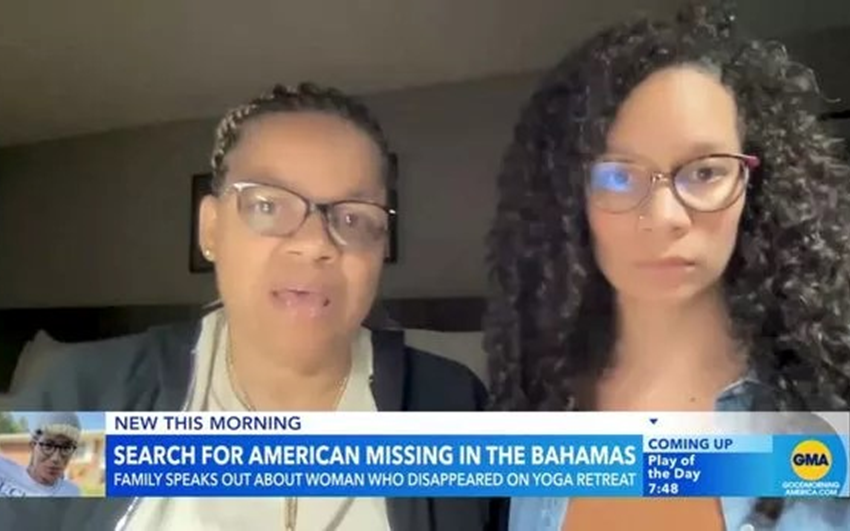
  • A MOTHER’S GRIEF MAKES FALSE ATTACKS ON THE BAHAMAS

    A MOTHER’S GRIEF MAKES FALSE ATTACKS ON THE BAHAMAS

    On Thursday 11 July 2024, a series of excerpts in the media of an interview with the relatives of a transgender woman from Chicago named Taylor Casey were published far and wide.  Even the local broadcast stations published this prejudicial interview which ended up making false and defamatory accusations against the Royal Bahamas Police Force.  Taylor Casey came to The Bahamas on holiday and to spend time at the Yoga Retreat.  At some point, she wandered off on her own and was never seen again.  She has a history of being bipolar.  Her own family said that she was often depressed and there is a report that she wrote a suicide note in her diary.  A search was done and nothing has been found, save her telephone in the deep waters off Paradise Island.  She has disappeared. The evidence is that or suggests that a bi-polar individual simply wandered off and drowned by misadventure or deliberately ended her life.   The mother and the sister in the face of this grief feel empowered to simply spout off any nonsense that comes to their heads about the investigation, accusing the Royal Bahamas Police Force of corruption simply because the head of the Criminal Detective Unit’s former head has been suspended but for something completely different than this investigation. He was in no way involved in it. The Bahamian police have always called upon outside expertise when it is needed and the FBI and the American government have been fully involved in the investigation.  The person simply cannot be found.   People and their families simply do not want to take responsibility for their own actions and those of their relatives which may sometimes lead to misadventure. It is always someone else’s fault.  That is the evidence in this case, nothing more or less.  The search will soon have to be abandoned because there is no further evidence and it has nothing to do with police corruption.  We understand grief but that is not an excuse to talk nonsense.