
One Country, Seventeen Realities: The Problem with Thompson’s VAT Proposal
ABAGAIL CARTWRIGHT AND DEAN’S BLUE HOLE
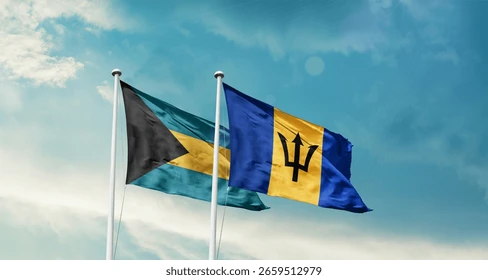
Shadow Minister of Finance Kwasi Thompson, last week, has again called for a VAT cap on fuel, citing Barbados and the reported BDS$12.6 million in consumer relief.
But comparisons without context can be misleading.
In 2022, Prime Minister Mia Mottley introduced a VAT cap of 47 cents per litre on gasoline and 37 cents on diesel in response to soaring international oil prices. The $12.6 million relief figure referenced by Thompson dates back to 2023. What is the corresponding figure for 2026?
More importantly, a VAT cap does not control international oil prices. Consumers may enjoy immediate savings, but rising global prices can quickly erode that relief.
Then comes the obvious question that Mr. Thompson has seemingly overlooked: The Bahamas is not Barbados.
Barbados is one landmass.
The Bahamas is an archipelagic nation, with communities separated by miles of ocean and facing vastly different transportation, storage, and distribution costs.
Consider a hypothetical example. Suppose gasoline costs $5.00 per gallon in New Providence and $6.50 per gallon in Long Island. If the Government applies a 30-cent-per-gallon VAT reduction, the price in New Providence would fall to $4.70, while the price in Long Island would fall to $6.20.
Let’s consider this.
Both consumers would receive the same 30-cent reduction. However, Long Islanders would still pay $1.50 more per gallon than consumers in New Providence. The tax relief would be identical in dollar terms, but the underlying price disparity would remain unchanged.
That difference matters. A driver in Long Island faces higher costs because fuel must be transported by sea, stored in smaller quantities and distributed through a less competitive market. Those additional costs are not created by VAT, so reducing VAT alone cannot eliminate them. It may lower the final price, but it does not address the structural reasons why fuel costs more in the Family Islands. Barbados does not have this reality to consider.
Equal tax relief on fuel does not necessarily mean equitable relief in an archipelagic nation.
Furthermore, with a VAT cap, how much revenue would the Government sacrifice? For how long? How would the shortfall be financed? How will the family islands receive measurable, equal benefit? These questions must be examined thoroughly and analyzed meticulously before any policy is adopted.
Finally, a hurricane-prone nation cannot responsibly surrender revenue without considering its ability to respond to emergencies, maintain essential services, and invest in critical infrastructure. Any proposal must account for the fiscal consequences, the duration of the measure, and the Government’s capacity to replace the lost revenue.
I am not opposed to examining a VAT cap. But responsible governance requires more than politically attractive proposals without proper analysis.
Mr. Thompson offered a comparable solution to the current high costs of living, but he also owes Bahamians an explanation of his recommendations, not simply a Barbados comparison without adequate context. Mr. Thompson knows better.
Relief must be affordable, sustainable, and equitable. Otherwise, are we proposing sound economic policy or merely playing politics with people’s hardships?
-Abigail Cartwright