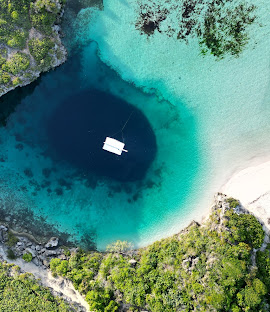
ABAGAIL CARTWRIGHT DEAN’S BLUE HOLE
The Price of Being Bahamian
Last week, residents of Great Guana Cay endured approximately 13 days without electricity. This was more than unfortunate; it was unacceptable. As Bahamian citizens, on a sparsely populated island, they are entitled to the same basic services and customary rights enjoyed by residents elsewhere in the country.
But how should a government balance the high cost of serving remote communities with its obligation to provide essential services?
Following the reporting of this unfortunate news in Great Guana Cay, there were sweeping claims that the government is “doing nothing” and it is incompetent. Then there came unsubstantiated allegations of corruption and reckless spending by the government. These claims are both unfair and misleading.
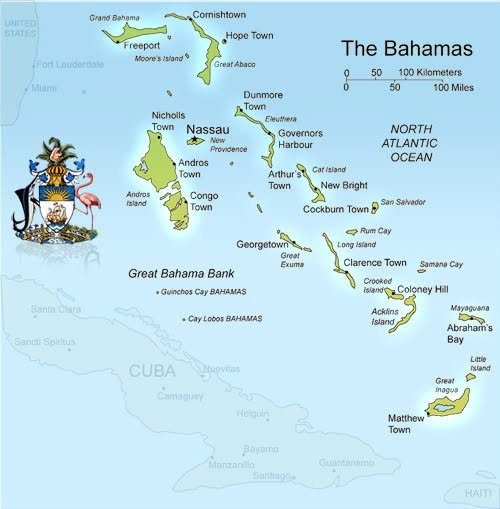
The Bahamas is an archipelagic nation. According to the last census, our population approaches 400,000, spread across 19 principal inhabited islands and numerous smaller cays and settlements.
Governing an archipelago is fundamentally different from governing a single-island state. Yet Bahamians frequently compare our country to Barbados, Jamaica and other Caribbean nations without appreciating our unique geographical challenges and the enormous financial and logistical responsibilities associated with governing a nation spread across numerous islands.
Every inhabited island, regardless of population, requires essential infrastructure and services. These include island administration, healthcare facilities with a morgue, schools, teachers, nurses, doctors, law enforcement, social services, produce exchange, electricity, water, roads, airports (some islands have more than one), bridges (some islands have more than one), docks (some islands have multiple), and mailboat services.
Ports of entry require Customs and Immigration personnel. Many services also require government vehicles, staff, staff accommodations, and ongoing maintenance.
Even ambulances and fire trucks, though they may be infrequently used in some communities, represent expensive but potentially lifesaving necessities.
These obligations do not disappear because an island has 100 residents instead of 100,000. In many instances, providing such infrastructure is neither financially feasible nor economically justifiable when measured against population size. Yet government must still provide and maintain these essential services, by duplicating expensive infrastructure, etc across the islands because citizenship, not location, determines the rights of Bahamians.
And infrastructure is expensive, and it does not maintain itself!
With limited revenue sources, growing demands and competing national priorities, government must continuously find innovative ways to finance development and maintenance while meeting the needs of New Providence, the larger populated islands, and advancing national economic interests.
I would argue that the Davis administration has undertaken one of the most ambitious programs of Family Island infrastructural modernization since Independence, addressing facilities and systems that have deteriorated through years of inadequate maintenance.
Certainly, more remains to be done. The Guana Cay experience demonstrates that. But legitimate criticism must be accompanied by an appreciation of the enormous responsibilities involved in governing our scattered islands.
Guana Cay brought to light the unique challenges that the government faces in sustaining accessibility to all Bahamians, and it does not matter that an island has less than 200 people; however, it does not mean that the government is not spending millions to construct roads in Exuma, improve water infrastructure in Long Island or develop a new airport in Cat Island. Simultaneous development and redevelopment takes place far beyond what we see in our own communities in New Providence or what we hear on the news.
Our geography makes governance expensive, but it must never make any Bahamian expendable. And our inability to see development should never lead us to conclude that work is not in progress.
-Abigail Cartwright