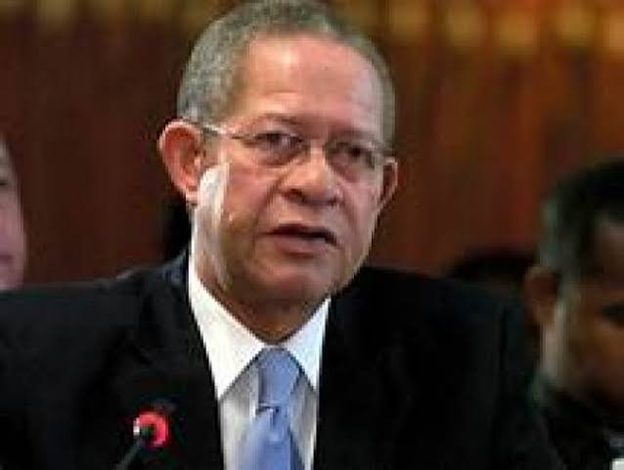
We applaud former Prime Minister of Jamaica Bruce Golding for his forthright statements about United States foreign policy. It is a foreign policy by threat. Everything is do what is say or else. Here is a transcript of what he had to
Say as reported by CVN News in Jamaica on 4 August 2026:
New rules are being handed down. Not after discussion or negotiation, but by social media posts at 2 30 in the morning when most of us are asleep. .
New tariffs were imposed on us in January of last year. Tariffs on the goods that we export to America. Although, America enjoys a huge trade surplus with Jamaica. What we export to the United States is less than a quarter of what we import.
Countries and companies that do business with Cuba run the risk of incurring severe penalties. We are being forced to contribute to the strangulation of the Cuban people who have helped us in so many ways.
Secretary of State, Marco Rubio when he visited Jamaica in March of last year is only the latest highly placed American official who has boasted of the strong, long-standing bond of friendship between Jamaica and the United States.
But let us be very clear, what is being done to us is not friendship. Holding a gun to your head and insisting that you must be reasonable and do things their way. That is not friendship.
The United States has put us under severe stress. That’s not what friends are for.
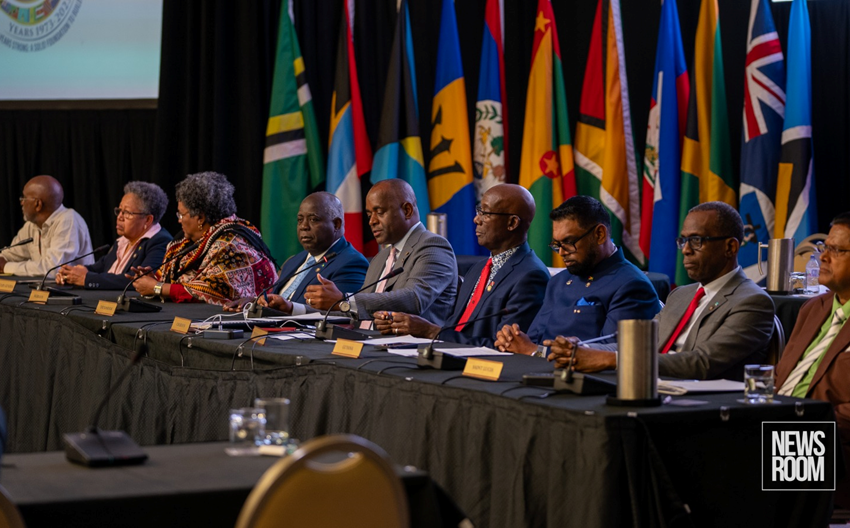
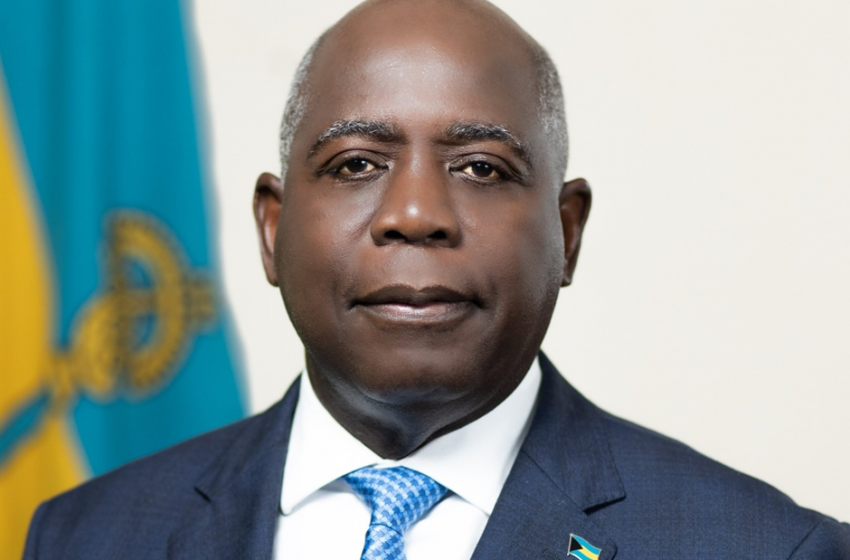
Prime Minister Philip Davis led the delegation of The Bahamas to the Heads of Government conference of CARICOM leaders in Gros Islet, St Lucia from 4 July 2026 to 8 July 2026. The following statement as issued by the Prime Minister summer up his time in St Lucia:
As the 51st Regular Meeting of the Conference of Heads of Government of CARICOM comes to a close, I thank the Government and people of Saint Lucia for their hospitality and for the care with which they hosted our Community.
This meeting gave us an opportunity to address the issues that matter most to our people: climate change, climate finance, regional security, Haiti, Cuba, economic resilience, and the future direction of CARICOM.
For The Bahamas, my focus was clear. I came to Saint Lucia to advance the interests of the Bahamian people and to ensure that our country’s voice is heard on the matters that affect our homes, our borders, our economy, and our future.
On climate change, I made the case that small island states need finance that matches the reality we face. We cannot continue to carry the cost of stronger storms, rising seas, and repeated recovery on financing terms designed for countries that do not face our level of risk. The Bahamas will continue to press for fairer access to climate finance, stronger disaster-risk protection, and practical tools that help countries recover faster when crisis comes.
I also updated my colleagues on The Bahamas’ role as a country partner in the Sustainable Markets Initiative’s work on private capital mobilisation. This is about getting governments, development banks, and private financial institutions to work together on real projects, with real financing, that can help countries like ours build resilience and protect our people.
Ahead of COP, I also supported a stronger CARICOM approach to climate negotiations. The Caribbean must be clear about its own priorities. We value the platforms through which small island states work together, but Caribbean concerns must be placed clearly and firmly on the table.
On security, I reminded colleagues that The Bahamas is a frontline maritime state. Our geography is a blessing, but it also places us along routes used by traffickers and criminal networks. We must continue to strengthen intelligence sharing, maritime cooperation, border security, financial investigations, cyber readiness, and joint training across the region.
The security of The Bahamas is tied to the security of the Caribbean. No country can meet these threats alone.
On Haiti, I reaffirmed that the stability of Haiti remains central to the stability of our region. The Haitian people deserve peace, security, and the opportunity to rebuild their institutions. The Bahamas will continue to support responsible regional and international efforts that help restore order, provide humanitarian relief, and respect Haitian sovereignty.
We also discussed the situation in Cuba. The Bahamas supports continued dialogue, respect for sovereignty, and practical cooperation with Cuba in areas such as health, education, disaster response, and technical assistance. We remain concerned about the hardship facing ordinary Cuban people and support efforts that ease that burden.
I also reported on The Bahamas’ engagement with CARICOM’s Associate Members and Overseas Territories. We support their fuller participation in the work of the Community, including the membership pathways being pursued by Bermuda, the Turks and Caicos Islands, and the British Virgin Islands. CARICOM is stronger when every part of the Caribbean family has a meaningful place at the table.
I leave Saint Lucia clear about the work ahead. Our region faces serious challenges, but we also have the ability to act together with discipline and purpose.
The Bahamas will continue to protect our people, advance our national interest, and work with our Caribbean partners to build a safer, stronger, and more resilient region.
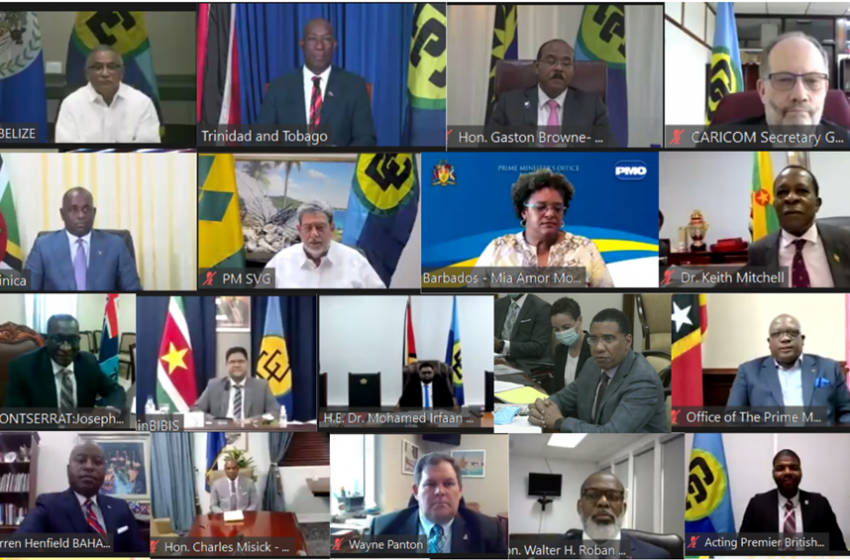
Prime Minister Philip Davis will lead the delegation for The Bahamas to the Heads of Government meeting in St Lucia of the Caribbean Community (CARICOM). The meeting will take place from 4 July to 8th July 2026. This will be the first meeting since the Prime Minister of Trinidad and Tobago Kamla Persad Bissessar trashed the body and said that it was a failure. It is not known whether she will attend the meeting. CARICOM is described by the Minister of Foreign Affairs of The Bahamas as the linchpin of the foreign relations of The Bahamas and its relationship with international partners. The meeting also comes at a difficult juncture with the United States of America, with the US seeking to export criminals from the US to the CARICOM countries and also threatening CARICOM countries that do not bow to pressure to end relations with Cuba.
It is truly regrettable what the United States government has wrought on the people of Cuba, through an economic blockade that now does not even allow them to get oil to run their country. They have money. They have the expertise but they are not allowed to buy the supplies they need to run their country. The people are close to starvation and there is nothing to run the factories. The diplomatic life is hard but the people of Cuba are suffering. Meanwhile their neighbour to the north is gloating about how they are going to take over the country. Sad. This has huge implications for the Caribbean Community.
The former Prime Minister of St Vincent and the Grenadines Ralph Gonsalves has attacked his former Prime Ministerial colleagues of CARICOM for being weak in the face of the actions of the United States in the region. The leaders met with the Secretary of State of the United States in St Kitts on Wednesday 25 February 2026. It seemed like a lovefest.
The delegation of The Bahamas headed by Prime Minister Philip Davis with Director General Jerusa Ali and Foreign Service Officer David Allens at the Heads of Government meeting of Caricom in St Kitts and Nevis.
The Chair in Office of CARICOM Dr. Terrance Drew of St Kitts and Nevis visited The Bahamas on Wednesday 18 February 2026. He will chair the Heads of Government meeting of the community next week from 24 to 26 February 2026. The visit to The Bahamas was part of a multi nation tour of the CARICOM region to brief heads on the proposals for the meetings. Prime Minister Philip Davis will lead the delegation for The Bahamas accompanied by the Foreign Minister Fred Mitchell. The meeting is expected to discuss Trinidad and Tobago’s behaviour and pronouncements about CARICOM, the United States and its relationship and the fact that there has been a disruption in the peace and security of the region as a result of the United States’ policies particularly as it relates to Venezuela and Cuba.
The Bahamas hosted the meeting with the Associate Member states of Caricom: Bermuda, Curacao, Turks and Caicos, Anguilla, British Virgin Islands in a virtual meeting to discuss the upcoming Heads of Government meeting in St Kitts and Nevis of Caricom. We were joined by Barbados.
The United States government is aggressively pressuring CARICOM countries to sign defence agreements with them, the subtext of which is to allow them with the leave of these countries to march across the region as they wish removing whom they wish. All have capitulated. In The Bahamas, the US Ambassador Herschel Walker has now twice intervened in the public domain to interfere with the internal affairs of the country. He castigated the country for not being serious in fighting drug trafficking at the Business Outlook Seminar and last week he said that the Bahamas should rethink the deal with the Chinese on the new hospital that the government proposes to build in Nassau. The Ambassador said that the United States could give a better deal. The Minister of Health responded by saying that the deal was first offered to the US and they could not come up with a solution so the Chinese is the better deal. There is nothing to reconsider.
The CARICOM Heads of Government meeting will take place in St Kitts from 24 to 26 February 2026. This should be very interesting. On the face of it CARICOM is split down the middle, with three countries safely within the United States orbit and others afraid to do anything other can capitulate to the policies of the United States even though, those policies are wrong. Countries have been forced to accept refugees from other countries that they would not normally accept into their small societies on pain of banning their citizens from entering the United States or other sanctions like tariffs on their goods entering the United States. Poor Trinidad and Tobago that has run out of oil is so supplicant now they agreed even to the killing of their own fishermen on the high seas in the United States policy of killing suspected drug traffickers. Two families in Trinidad are now suing the United States government for their acts of aggression and death against their relatives. The latest is the declaration by the United States that Cuba is a national security threat to them. Cuba is not a national security threat to them, nor was Venezuela. The US has stopped the Venezuelans from sending oil to Cuba and it appears they now have also stopped Mexico from sending oil to Cuba. They have threatened every country that trades with Cuba with tariffs on their goods entering the United States. The aim is to starve this brave country into submission for ideological reasons. Cuba has been a friend to the CARICOM region. It will be interesting to see if any country in CARICOM will step up and speak up for Cuba.
The United States government without warning and without any thought about arguments about kith and kin announced unilaterally that it is banning the citizens of Dominica and Antigua and Barbuda from coming into the United States.
The reasons they gave were in a tortuously worded so called proclamation in which they accused the governments of those countries of not providing a secure enough vetting system for citizens of the country, particularly those who became citizens by investment
The Caribbean countries immediately responded by saying that the concerns of the United States were not warranted. They went further and indicated that the US Embassies accredited to their countries had assured them that the concerns that the country had about the programme were satisfied and then minutes later the unilateral proclamation.
Only two countries seem to have agreed that the present posture of the United States is correct: Trinidad and Tobago and Guyana. We can understand Guyana because they have the threat of Venezuela on their border. Trinidad and Tobago’s Prime Minister has defended her policy on the basis of not wanting Trinidad’s citizens to be blocked from entering the United States. That would seem to be a legitimate fear.
CARICOM issued a statement calling for the United States to resume talks with the injured countries to resolve the situation.
Bottom line is the United States has the entire region in fear. Fear of a war and fear that if you speak up to disagree, that the United States will ban the citizens of that country from entering the United States.
Number of hits for the week ending Saturday 20 December 2025 up to midnight: 868,971;
Number of hits for the month of December up to Saturday 20 December 2025 up to midnight: 2,502,118;
Number of hits for the year 2025 up to Saturday 20 December 2025 up to midnight: 38,032,147;
We are in a tough spot the CARICOM countries. The CARICOM region is supposed to be a zone of peace but there is a facture line that has developed in the region between those who accept uncritically the word of the United States that they are killing drug traffickers on the high seas that threaten the security of the U S and the region. On the one side is Guyana, Trinidad and Tobago and Suriname. On the other side are the 11 others who argue not against the stopping of drug trafficking but adhere to the principles of the rule of law and judicial determinations before action and punishment. The Venezuelan government has cancelled all arrangements with Trinidad and Tobago as a result of the Trinidad government’s rhetoric. They have also declared the Trinidad and Tobago Prime Minister persona non grata. Trinidad and Tobago have been the most bellicose about it. The Trinidad Prime Minister for her part has said she gives not one wit about what CARICOM thinks. She has an obligation to Trinidad and Tobago first and foremost. The US action is guaranteeing the security of her country, she argues. Grenada is in a pickle. They have been asked to allow U.S. military equipment on their soil. They want to say no because it endangers their own citizen and makes them a target of Venezuelan military action but they dare not say no in the face of US pressure. Such is the sovereignty of these 14 countries in the Caribbean Sea… a zone of peace indeed.
The militarization of the southern Caribbean by the United States continued last week, with the report that B 52 bombers were flying off the coast of Venezuela. Yet another boat was blown out of the water by the US without a judicial finding of any kind. That brings to 27 the body count of the extrajudicial killings. The US announced that they have given the Central Intelligence Agency permission to begin work within Venezuela to get rid of the government there. They say this is all related to drug smuggling by Venezuelan officials. This is denied by those officials. They say this is all ideological by the United States. Where does CARICOM stand? It is divided. On the one hand are Suriname, Trinidad and Tobago and Guyana who uncritically support the US position. There is Jamaica riding the middle and the rest who say that there is an extra judicial nature to this and that it violates international law.
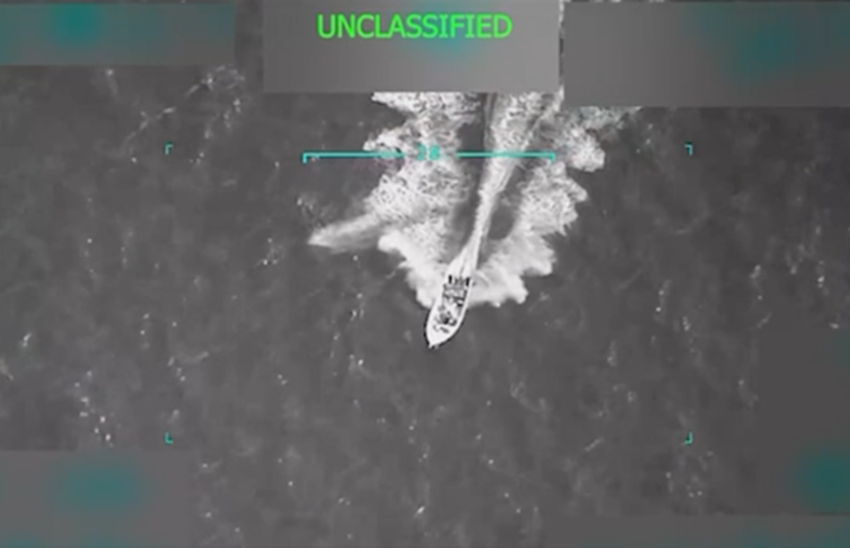
On Monday 1 September 2025, the US Secretary of State posted on his X account that the US had blown what they say was a drug ship out of the waters in the southern Caribbean. The video soon followed and it appeared that the ship was evaporated by US fire from above. It called into question whether this was controlled by human hands or this was an explosion controlled by algorithms. The CARICOM Foreign Ministers met and chewed over the announcement the week before that the US was using five navy ships, a nuclear submarine and marines at the ready to combat drug smuggling. Then the crowing from Mr. Rubio followed by the boasts of this boss Donald Trump. The ethical questions abound but quite apart from that of killing fishermen out to get their commercial catch by mistake, there is the notion of this being a pretext for invading Venezuela. The Americans have an obsession with Nicolas Maduro, the President of Venezuela and have put a 50 million dollars bounty on his head, without any evidence to support what they allege about him and his connection drug trafficking into the United States. CELAC, the Latin American and Caribbean group, could not come to a consensus on a statement to denounce the deployment. Trinidad and Argentina say they support it the US intervention. That was the end of that. CARICOM has been silent even as they tout what they say is a zone of peace in the Caribbean sea. The Americans say this is not about invasion but you know we have seen this script before. 11 people were killed and the experts say this was a clear violation of international law and the treaties to which the U S is a party.
Fred Mitchell, Chair of the PLP, reflected on the eve of the 25th anniversary of the death of the late National Hero Sir Lynden O Pindling, how difficult it is to defend the sovereignty of a small state, as the United States has moved ships into the seas off Venezuela and Trinidad, using drug smuggling as a pretext to invade Venezuela. Sir Lynden Pindling died on 26 August 2000 at the age of 70. Trinidad welcomed the placement of the US battleships and troops in their surrounding seas. Here is the statement by the PLP’s Chairman delivered on Monday 25 August 2025:
Tomorrow will mark 25 years since the passing of the father of our nation Sir Lynden Pindling. May rest in peace. As we remember him and his role as the pater familias of our country, we look at today’s events around the Caribbean Sea with alarm and concern. This self-declared zone of peace may be plunged without regard to that declaration into a zone of instability.
It tells us that declarations of peace and sovereignty are easy to declare, but when we are small, difficult to defend. Our ministers are being attacked and threatened because of their ordinary work. Our slave ancestors had a similar problem. They were bludgeoned into submission at the point of a gun, murdered, their culture denied and denigrated, but they still arose. A luta continua, It comes in different forms, but the struggle is real and it continues for the peace of the region, the sovereignty of our nations, and for justice for people of African descent, and indeed all peoples in this region. We must, at least raise our voices in protest.
The CARICOM Heads of Government meeting wrapped up its 49th session in Montego Bay, Jamaica on Tuesday 8 July 2025. The conference was headed by Prime Minister Andrew Holeness of Jamaica. While much of the conference focused on internal CARICOM matters, the conference was most concerned about events in Gaza where killing and genocide of Palestinians continues apace without any let or hindrance. The conference called for an end to hostilities and asked that peace be restored to the region within a two state solution where Palestine would have the right to its independence and sovereignty.
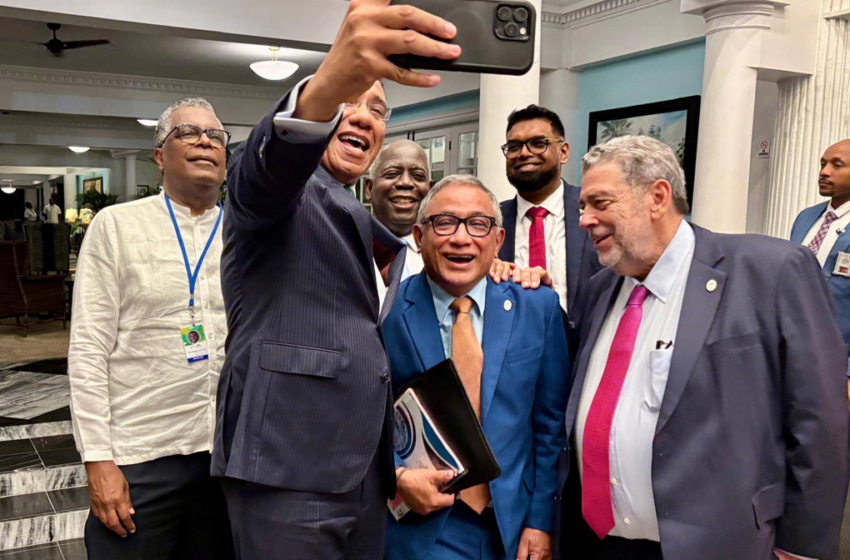
1 a.m. 8 July 2025, the session just broke up and Jamaica’s PM Holeness demanded a selfie form left: Fred Mitchell of The Bahamas, PM Holeness, John Biceno of Belize, Philip Davis of The Bahamas, Irfaan Ali Of Guyana and Ralph Gonsalves of St Vincent and the Grenadines.
Last weekend on a wintry Sunday afternoon in March, the United States sent a special envoy to speak with CARICOM foreign ministers about the new policy to deny them access to the United States if their countries continued to hire Cuban doctors. The case made for the United States in public in this matter is ideological. It is not based in facts. None of the countries in CARICOM are in anyway involved in anything approximating human trafficking but that is the peg on which the new policy of the United States hangs its hat.
The facts can’t change their minds. Their leaders are blinded by the hatred of emigres in South Florida who cannot get over the fact that Fidel Castro defeated them in 1959 and he and his successors have been able to create a successful nation since then.
What will CARICOM do in response?
So far Denzel Douglas has been the strongest from little from St Kitts and Nevis. He said that his nation will not be the subject of external pressure and will do what it perceives to be in their best interests.
Let’s hope others in CARICOM will speak up. We do not need to go to the United States and we can stay quite safely at home.
Fred Mitchell congratulates Albert Ramdin, the first CARICOM Secretary General of the OAS
We wish to extend warmest congratulations to Albert Ramdin, the Foreign Minister of Suriname, as he was elected by acclamation on Monday 10 March 2025 in Washington D C. Mr. Ramdin has been seeking the job for almost 30 years. In addition to serving as Foreign Minister, he was also elected for two terms as the Assistant Secretary General of the Organization of American States. He is well equipped for this job. The job comes with considerable risks. It comes at a time of conflict in the region and diplomatic splits of an irreconcilable nature. The United States has given up on multilateralism and has been refusing to pay and honour its obligations to the international organizations that they have joined and most cases invented. The Foreign Minister The Bahamas in his congratulatory message to Mr. Ramdin told the body gathered that notwithstanding the current fashion, The Bahamas was committed to multilateralism. It was the creed of the founding father of The Bahamas the late Sir Lynden Pindling.
The following statement was issued by Caricom in the face of the change of Prime Ministers in Haiti:
The Caribbean Community (CARICOM) has followed with deep concern the transitional governance process in its Member State, Haiti.
CARICOM recognises the dedicated contribution of former Prime Minister Garry Conille and looks forward to an early meeting with the new Prime Minister Alix Didier Fils-Aimé and continued dialogue with the leaders of the Government of Haiti.
With the passage of time, the pressure of the approaching deadlines for attaining the major objectives of the transition process and the end-state, the conduct of free and fair elections and the seating of a new and democratically elected government, becomes more urgent. Cohesion and coherence with respect to the roles and responsibilities of the major actors in the transitional process, as well as accountability will be critical ingredients for the ultimate success of the transition in the months ahead. In this regard, Caricom stands ready to work with the leaders of Haiti.
CARICOM has always taken the position in its good offices and facilitation efforts that the solutions to Haiti’s problems must be home grown, resolved by and for the Haitian people. The Community continues to believe that Democracy can thrive only with compromise and respect for the rule of law as well as a demonstrable commitment to the security and the welfare of its citizens, and an early restoration of constitutional order and democratic institutions.
The Caribbean Community assures the people of Haiti of its continued support and of its expectations that efforts will be made to reach the goal of elections pursuant to the agreed framework by November 2025.
Caricom heads are now meeting in Grenada for a couple of days. The meeting should have taken place at the start of the month of July but there was a hurricane called Beryl that wiped out parts of the nation states and so they all had to go back to the drawing board. The topics are climate change and especially the storm and the damage it wrought so that Ralph Gonsalves had to rearrange his whole Cabinet in St Vicent and the Grenadines. Grenda has a significant housing stock to replace that will likely be in the hundreds of millions of US dollars. Then there is Haiti finally seeming to settle down into some kind of normality. At least it seems to be moving in the right direction. Then there is the African and Caribbean connection. Congratulations to the heads for carrying the baton from the Caricom founders and helping to keep this troubled region going.
Hurricane Beryl bore down on the West Indies and created havoc over the past week in Barbados, in Grenada and in St Vincent and the Grenadines. It also affected St Lucia, Dominica and Jamaica. The Caricom heads met on Friday past and determined that once again they had to spend monies which they did not have to repair the damage. In this respect, there is nothing different about the hurricane response than the response over the last fifty years. Housing destroyed, GDP badly dented and we go to the markets to borrow and find ourselves deeper in debt. The Caricom heads need a reality check. The answer is resilience. We need to make sure that we get the money to build back a proper housing stock and better sea defences and flood defences. If we do that successfully then it will be easier to respond to the loss and damage. In fact, it will be minimal but we seem in this region to have a penchant for complaining about the state of affairs, describing the state of affairs but not doing anything about it.
We agree on the following statement issued by Caricom Heads of Government at their meeting in Guyana last week:
1. an immediate ceasefire in Gaza;
2. the immediate release of all hostages and for their humane treatment at all times in compliance with international law;
3. all parties to immediately and fully comply with their obligations under international law, including international humanitarian law and international human rights law; and
4. the immediate, safe, unimpeded access for adequate, sustained humanitarian support throughout Gaza including food, water, medicines, medical care, fuel and electricity.
With St Vicent and the Grenadine’s PM Ralph Gonzales and David Ruttley the Foreign Office Minister of the UK in the background the Premier of the British Virgin Islands
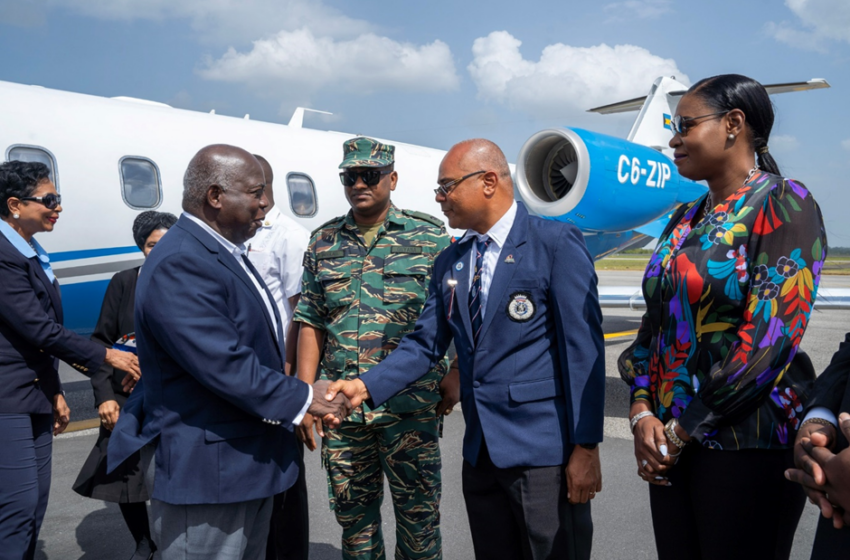
Fred Mitchell says farewell to Georgetown, Guyana at the airport farewell of colleagues of Caricom at the end of the 46th Heads of Government meeting of Caricom 29 February 2024. The reps of the 4 B’s: BVI, Barbados, Bahamas and Bermuda.
Fred Mitchell with Prime Minister Philip Davis with President Irfaan Ali of Guyana, Patricia Scotland, Secretary General of the Commonwealth at the Heads of Government meeting in Georgetown, Guyana 28 February 2024.
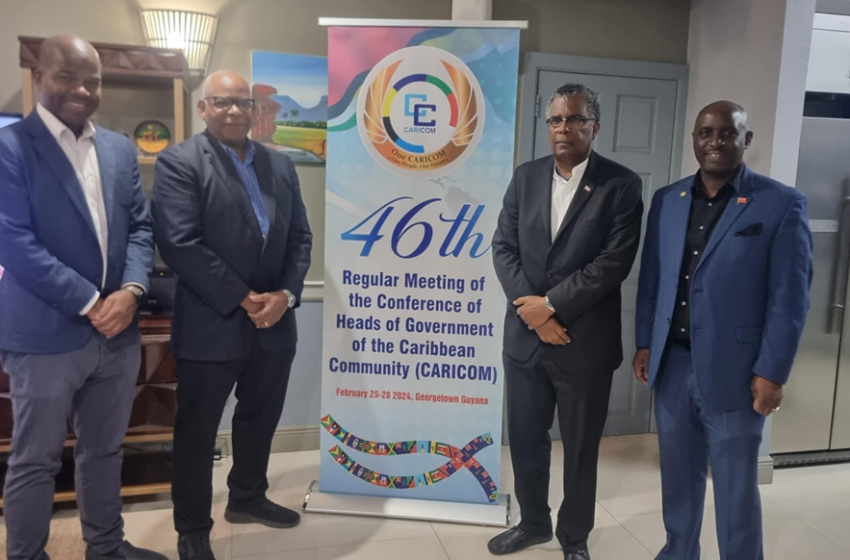
Prime Minister Philip Davis will head a Bahamian delegation which will include the Foreign Minister Fred Mitchell to Georgetown, Guyana for the semiannual Heads of Government meeting of Caricom states from 26th February to 28th February 2024. The topics will include Haiti, Crime and Security, Agriculture and the applications of various dependent territories to become full members of Caricom.
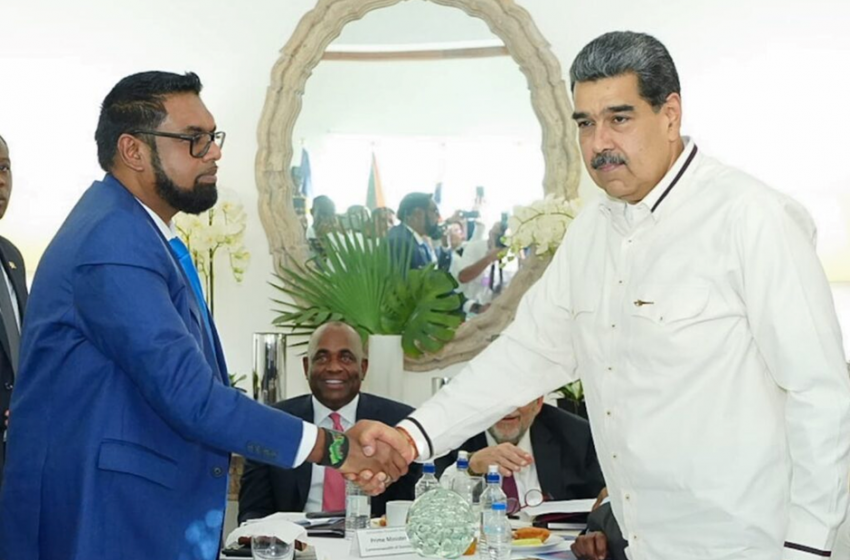
The Caricom Prime Ministers and Presidents sat down in St Vincent on Thursday 14 December 2023 to talk some sense into the head of President Nicolas Maduro of Venezuela, who has designs on two thirds of the territory of Guyana, its neighbour on the South American continent. He held a fake referendum to support his territorial grab, claiming that Venezuela had been cheated out of its land by an arbitral award back in 1899. They forgot that they conceded all of that when Guyana under the British went to independence in 1966. The disputes were to be settled in accordance with the procedure of the United Nations. Instead, Mr. Maduro who is unpopular at home, facing elections is trying to galvanize the nation on this emotional point but legally unsustainable. The idea was to talk peace but the backup is if he messes around, they will find the Americans there to get rid of him.
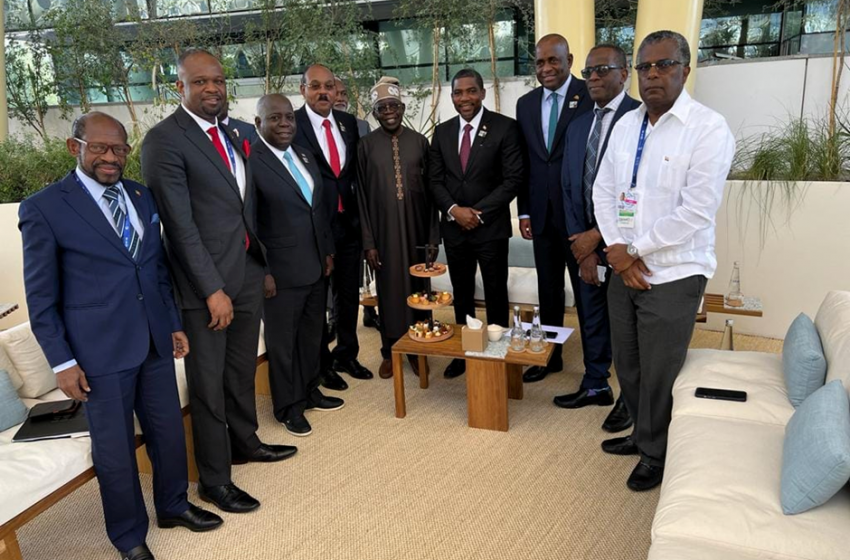
Heads of Government of the Caribbean with the President of Zambia at COP 28 in Dubai. 1 December 2023 and secondly, with the President of Nigeria. With Foreign Minister Fred Mitchell and Prime Minister Philip Davis.
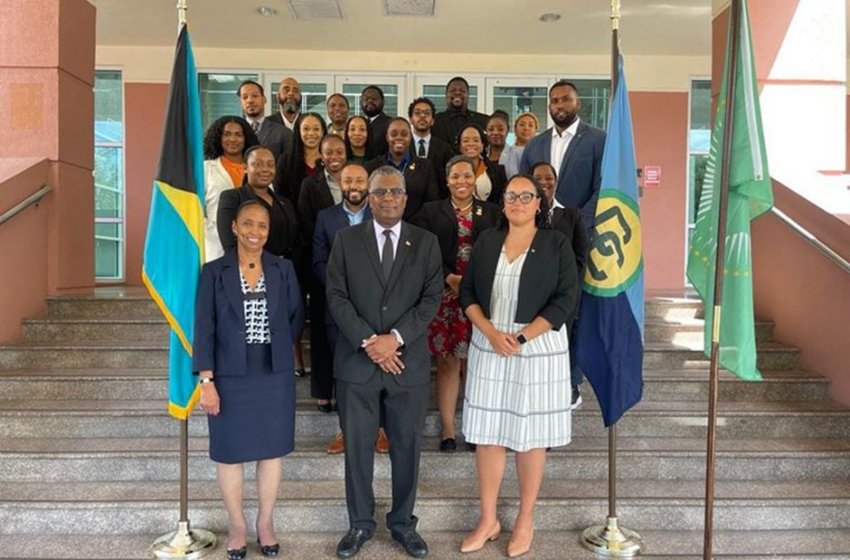
Fred Mitchell Foreign Minister marks Caricom Africa Day on the steps of the Foreign Ministry with Director General Jerusa Ali and her staff
7 September 2021
In keeping with a decision taken at the Inaugural Africa-CARICOM Summit on 7 September 2021 for an annual acknowledgement to signal an ongoing commitment to strengthened relationships, The Bahamas joined CARICOM to mark Africa-CARICOM Day today.
The Bahamas Government has appointed diplomats to several African countries with a view to strengthening cultural, political and economic ties. Our historical ties and shared aspirations with Africa are the foundation upon which we can, through diplomacy and people to people exchanges, build a brighter tomorrow, and we firmly believe that our cooperation will lead to mutual progress and prosperity.
Let us acknowledge the importance of slavery reparations and reparatory justice to healing the African Diaspora including the Caribbean. We recognize the historic wrongs that have left lasting scars on our communities. Together, CARICOM and Africa can take the lead in the global discourse on reparations, ensuring that those who suffered the transatlantic slave trade and colonialism are not only recognized but also receive the justice and support they rightfully deserve. Through collaborative efforts, we can pave the way for healing and reconciliation. We are very confident in the work of our Reparations Committee, chaired by Dr. Niambi Hall Campbell and we are very proud of Ms. Gaynell Curry for her work as an Independent Expert Member of the UN Permanent Forum for People of African Descent.
Trade and investment ties represent a critical avenue for our future collaboration. By deepening economic relations, we can unlock the vast potential of our combined markets. Strengthening trade ties will not only benefit our nations’ economies but also promote regional and global economic stability, demonstrating the power of South- South unity in the face of challenges. We are pleased that The Bahamas Development Bank has signed an MOU with African Export-Import Bank that will provide up to $700 million in investment for sustainable development projects throughout the Caribbean.
The right to development and sustainable development are integral to our shared vision. CARICOM and Africa can collaborate on initiatives that promote inclusive economic growth, social equity, and environmental sustainability. Together, we can set an example for the world, showcasing that progress can be achieved while preserving our planet for future generations.
Caribbean and African cultural ties are a source of strength and unity. In The Bahamas, we want to encourage African heritage tourism, which offers a unique potential to celebrate our shared cultural legacy. By promoting tourism that highlights our common African roots, we can enrich our cultural landscapes, create economic opportunities, and deepen the bonds between our regions. Embracing our shared traditions and celebrating our diversity can foster greater understanding among our peoples. Through cultural exchanges, festivals, and educational programs, we can ensure that our heritage remains a vibrant and integral part of our societies, serving as a bridge between our communities. Next week, the Prime Minister is very pleased to host a State visit of the President of Mokgweetsi Eric Keabetswe Masisi and several ministers and senior officials next week. Botswana is keenly interested in learning more about how The Bahamas delivers world class tourism offerings for a diversity of travelers.
The future of CARICOM-Africa relations holds immense promise. Our collective commitment to reparations, trade, sustainable development, heritage tourism, and strengthening cultural ties will undoubtedly pave the way for a more interconnected, prosperous, and harmonious future.
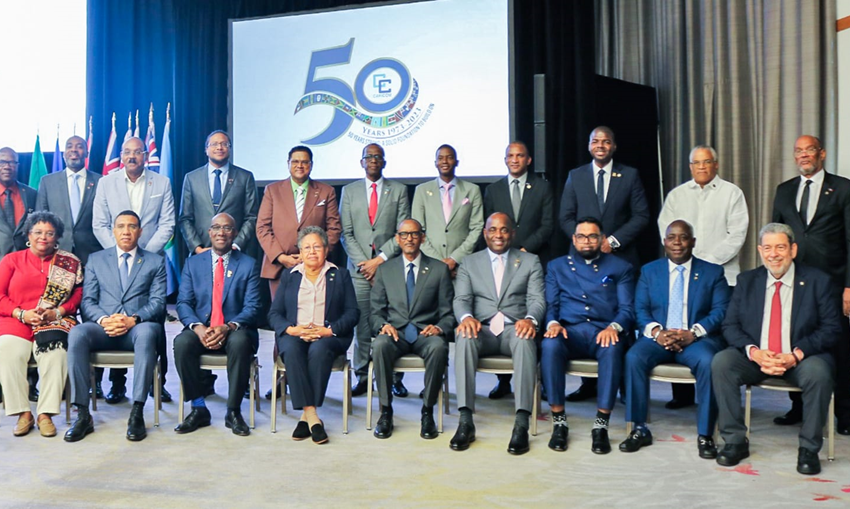
The Heads of Government of the Caricom region with their special guest Paul Kigame, President of Rwanda. From left front row: Mia Mottley ( Barbados); Andrew Holness (Jamaica), Keith Rowley (Trinidad), Carla Barnett (Secretary General), Mr. Kigame, Roosevelt Skerrit (Dominica), Irfaan Ali ( Guyana), Phillip Davis (The Bahamas), Ralph Gonsalves (St Vincent and the Grenadines); (unidentified), David Burtt (Bermuda); Gaston Brown ( Antigua and Barbuda); (unidentified); Chan Santokhi (Suriname); Philip Pierre ( St Lucia ); Erwin Saunders (Turks and Caicos Is); Natalio Wheatley (British Virgin Islands); Eamon Courtenay (Belize); Ariel Henry (Haiti)
Prime Minister Philip Davis is debriefed by Caricom delegation that landed from Port au Prince at the Lynden Pindling International Airport. Keith Bell, Minister for Immigration and Wayne Munroe, National Security Minister, Dennis Moses, Trinidad and Tobago’s High Commissioner with Fred Mitchell, Foreign Minister. 27 February 2023
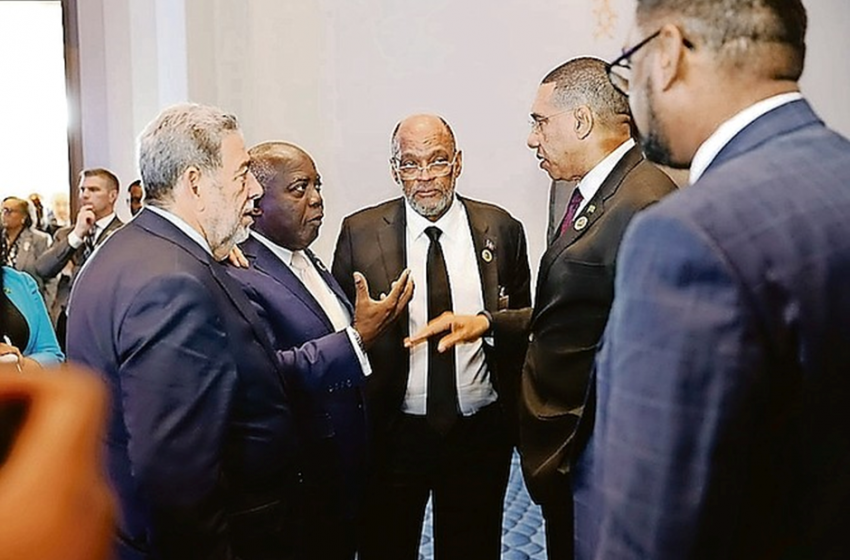
File photo from the meeting in Nassau c/o The Tribune: Prime Minister of St Vincent and the Grenadines Ralph Gonsalves, Prime Minister Philip Davis, Prime Minister Ariel Henry of Haiti, Prime Minister Andrew Holness of Jamaica.
As a follow-up to the Caricom Heads of Government meeting in Nassau on 15 to 18th February 2023, a delegation of Caricom officials will travel to Haiti on Monday 27 February 2023, led by the Jamaican Prime Minister Andrew Holness. He will be joined by officials from Trinidad and Tobago and The Bahamas. From The Bahamas will be the Defence Minister Wayne Munroe and the Immigration Minister Keith Bell.
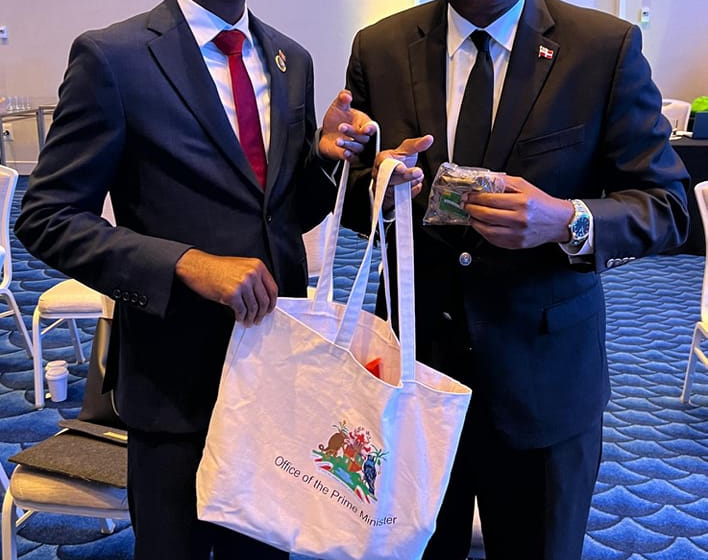
THE MITCHELLS: Prime Minister Dickon Mitchell of Grenada with Fred Mitchell, Foreign Minister of The Bahamas. The former presenting gifts from Grenada to the latter after the successful 44th regular meeting of the Caricom Heads of Government. 17 February 2023
Fred Mitchell MP says thank you to the Bahamian public for their patience during the Caricom meetings. Pronounces them a success. Speaks about the security issues at the conference. Addresses the issue of security and balancing that with the right to protest; similarly speaks of the balance between the right to free speech and to protect against hate speech. Says farewell to our Caricom guests. Congratulations to Prime Minister Philip Davis for his leadership of the conference. 18 February 2023
Prime Minister Philip Davis ought to be congratulated by the country for the expert manner in which he handled the 44th regular meeting of the conference of Heads of Government of the Caribbean Community, known as Caricom. The meeting went off smoothly and the aim and objectives of chairmanship were accomplished. The idea was to set some firm guidelines for the crisis in Haiti. That was accomplished with the visits of the Americans and the Canadians. Prime Minister Justin Trudeau flew and spent two nights. He established Canada’s commitment to supporting the Caricom efforts. Then on climate change, it is clear what our marching orders are for the COP 28 which is to be held in Dubai in November. The delegates themselves were pleased with the reports and decisions on energy security, health, and food security. Congratulations once again.
Heads of Government from around the Caribbean will gather in Nassau for the mid-year heads of government meeting of Caricom. The topics for the meeting will largely centre around Climate Change, Haiti, Food, and Energy Security. The Bahamas has a special interest in the internal democracy of the remaining dependent territories of the United Kingdom, France, and the Netherlands. The President of Ukraine Volodymyr Oleksandrovych Zelenskyy will address the conference by video link. Justin Trudeau, the Prime Minister of Canada will join the conference live. There is also a special Foreign Minister’s meeting and there are delegations from the United States, South Korea, and the Food and Agricultural Organization (FAO) that will address the conference. The Chairman of the Conference is Philip Davis, the Prime Minister of The Bahamas. The official opening of the conference is 15 February 2023 at Atlantis at 6:30 pm. Then the session begins at Bahamar on the 16th and adjourns on the 18th February 2023.
Creswell Sturrup, the Permanent Secretary in the Office of the Prime Minister.
The Ministry of Foreign Affairs and the Office of the Prime Minister are in full throttle now, putting the finishing touches on the conference of Heads of Government that will take place in The Bahamas on 15 February to 18 February 2023. The Caricom Heads will be in Nassau for those days. The special guest for the occasion will be Justin Trudeau, the Prime Minister of Canada. The main themes will be climate change and the situation in Haiti. Scenes from their planning meeting of 1 February 2023 at the Royal Bahamas Police Force Headquarters.
Prime Minister Philip Davis of The Bahamas has become he new Chairman of Caricom, in the rotating Chairmanship of the regional body. Here is the statement of the list of priorities outlined in his openings statement upon assuming office on 1 January 2023. The Caricom Heads of Government meeting will take place in Nassau on 16 February 2023:
A Happy New Year to you all!
We usher in a most auspicious year for both the Caribbean Community (CARICOM) and The Bahamas, as we both celebrate our 50th Anniversaries.
For our Community, this milestone comes at a time when regional co-operation has never been more urgent and necessary. The shock of and response to the Covid-19 pandemic was a stark illustration of the limitations of working alone.
Working alone, none of us will be able to overcome the existential threat posed by climate change. Working alone, none of us will be able to fully seize the opportunities of the new world order, where old certainties are fast disappearing, and new technologies favour the agile and the clever.
We all share common histories— trials, traumas, and triumphs. As regional neighbours, we have, through the years, encountered many of the same hurdles, beat down the same walls, and conquered the same challenges. And indeed, we owe it to ourselves and each other to recognize that we are and always have been in this together.
We are at a tipping point, where it is imperative that we build on and strengthen the
foundations of the past 50 years. There is already much on the agenda.
Our Community is making great strides towards ensuring food and nutrition security. And we are on track to reduce our food import bill by 25 percent by 2025.
With the help of international partners, we also want to make further progress on our
plans to increase the use of renewable energy. This is not only an alternative to expensive fossil fuel-based energy, but a critical means of reducing carbon in the fight against climate change.
We will also continue to work closely and vigorously with other Small Island and Low-lying Coastal Developing States (SIDS) to continue our advocacy on the many issues relating to climate change, which impact us all. In particular, we will aggressively push for the ‘Loss and Damage Fund’ agreed at COP27 in Egypt, to be made fully operational.
The Secretary-General of the United Nations has assured us of his continuing support for our advocacy to pursue debt relief, reform of International Financial Institutions, and to establish a Multi-Dimensional Vulnerability Index for fairer criterion for access to concessional development funding.
At home, we are determined to help Haiti resolve its challenges. The beleaguered people of Haiti desperately need respite from the political, economic and security crises which have engulfed the country. We will continue to support all stakeholders to craft a Haitian led solution. For CARICOM, the resolution of the immediate crisis will be a first step towards the crafting of a long-term sustainable development plan for Haiti.
My thanks to the President of Suriname, His Excellency Chandrikapersad Santokhi, for his superb stewardship of the Community over the past six months. With the help and support of my colleague Heads of Government, I look forward to building on his legacy.
This New Year holds much promise for our Caribbean Community. Over the next 50
years, we will continue to seek to strengthen our partnership, so that the lives of all of our peoples are made better.